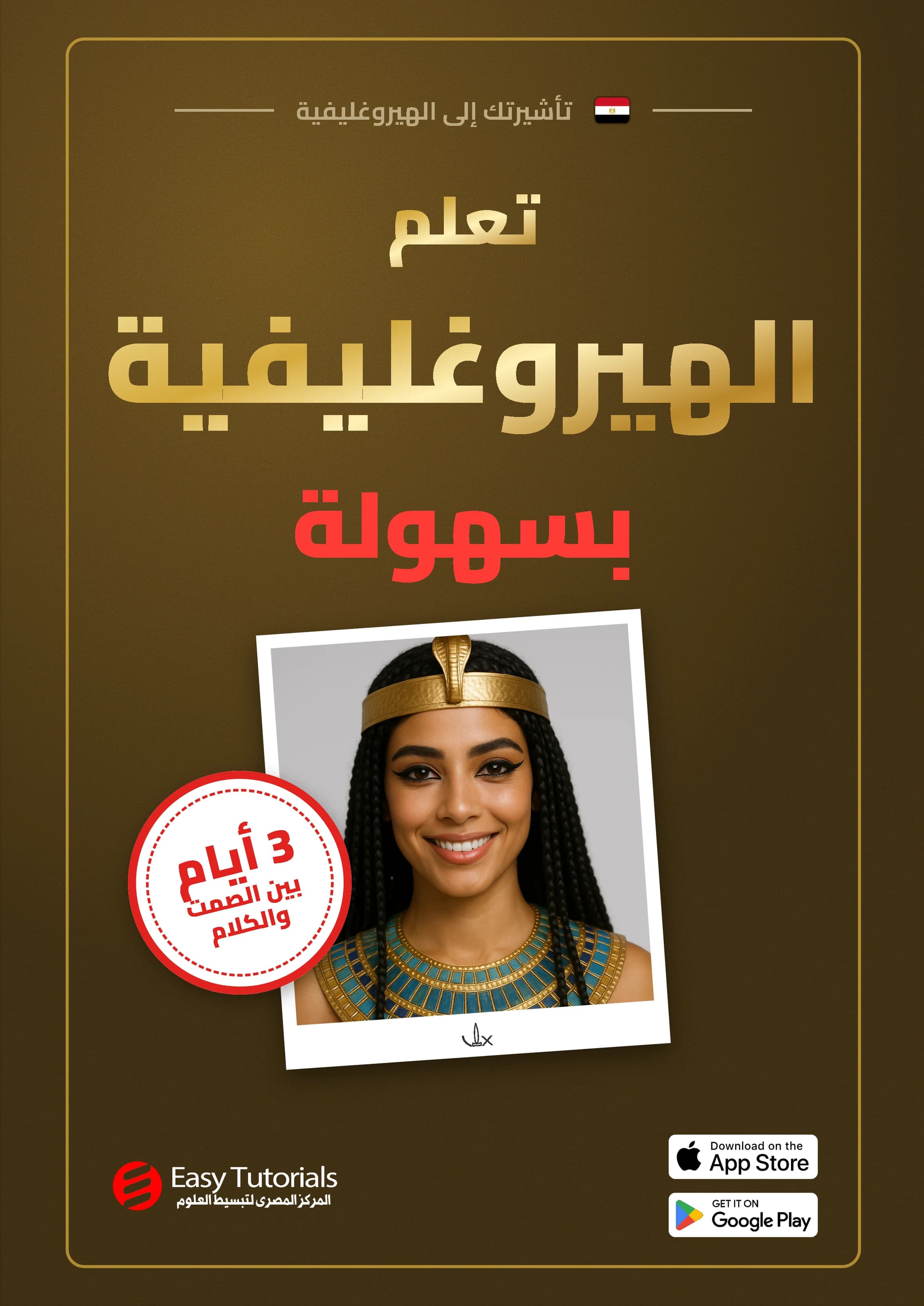
Learn Egyptian Hieroglyphs Easily
Unlock the Secrets of Ancient Egypt
Master the art of reading hieroglyphics with ease and confidence.
What you'll learn
- Understand the basics of hieroglyphic writing
- Identify common hieroglyphic symbols
- Translate simple hieroglyphic texts
- Recognize historical context of hieroglyphics
- Apply knowledge in practical exercises
- Gain insights into ancient Egyptian culture
About this book
This book serves as a comprehensive guide to understanding and interpreting hieroglyphics, the fascinating writing system of ancient Egypt. With clear explanations and practical examples, readers will embark on a journey through the history and significance of these symbols.
Whether you are a beginner or looking to deepen your knowledge, this resource provides step-by-step instructions and engaging exercises that make learning hieroglyphics accessible and enjoyable. Discover the beauty of this ancient language and connect with the rich culture of Egypt.
Who this book is for
- Students of ancient languages
- History enthusiasts
- Travelers to Egypt
- Cultural researchers
- Lifelong learners
Why read this book
- Step-by-step learning approach
- Engaging exercises for practical application
- Rich historical context provided
- User-friendly layout and design
About the language
Ancient Egyptian is a dead language that was spoken in Egypt for more than 3,000 years. It belongs to the Afroasiatic family, the same large family that includes Arabic. No one speaks it today, but scholars and history lovers study it worldwide.
Where it is spoken

Egypt
Writing system
It is written in hieroglyphs, usually right to left, though it could also run left to right or top to bottom.
Quick facts
- The earliest hieroglyphic writing dates to about 3200 BC, making it one of the oldest writing systems in the world.
- The Rosetta Stone, found in 1799, carries one text in hieroglyphic, Demotic and Greek.
- French scholar Champollion deciphered hieroglyphs in 1822 thanks to the Rosetta Stone.
- Coptic is the last stage of the Egyptian language and is still used in the liturgy of the Coptic Church.
Why learn it
- Read the inscriptions on temple walls, tombs and statues yourself.
- Study Egyptology and archaeology, or work as a specialist tour guide.
- Understand ancient Egyptian history and culture from its original sources.
Words shared with Arabic
- طوبة (tuba) — Arabic for brick, from the ancient Egyptian word for brick via Coptic.
- تمساح (timsah) — Arabic for crocodile, from ancient Egyptian msh.
- واحة (waha) — Arabic for oasis, from ancient Egyptian wht; English oasis shares this origin.
- توت (Tut) — First month of the Coptic calendar, named after the god Thoth.
Comes with the book: the «Learn and Speak Easily» app
The book teaches you the word; the app trains you to say it. Open the app with your easyT account and practise every word and phrase in the book out loud.
1,821 words and phrases to practise in this book
Hear the right pronunciation
Every word and phrase in the book, spoken clearly, at normal speed or slowly.
Test yourself on every sign
The app shows a sign and asks for its meaning or its sound; pick the right answer out of 4.
The book's own chapters
Same chapters in the same order, with the word, its pronunciation in Arabic letters, its meaning and the book page.
A quiz after every chapter
Quick questions on what you learned; the app keeps your best score and your progress per chapter.
App details
- Free for everyone who bought the book, printed or digital
- Every language is open to Premium subscribers
- Sign in with your easyT account
- Works offline after a language is opened once
- Checking runs on your phone — your voice is never recorded or stored

 Coming soon to the store