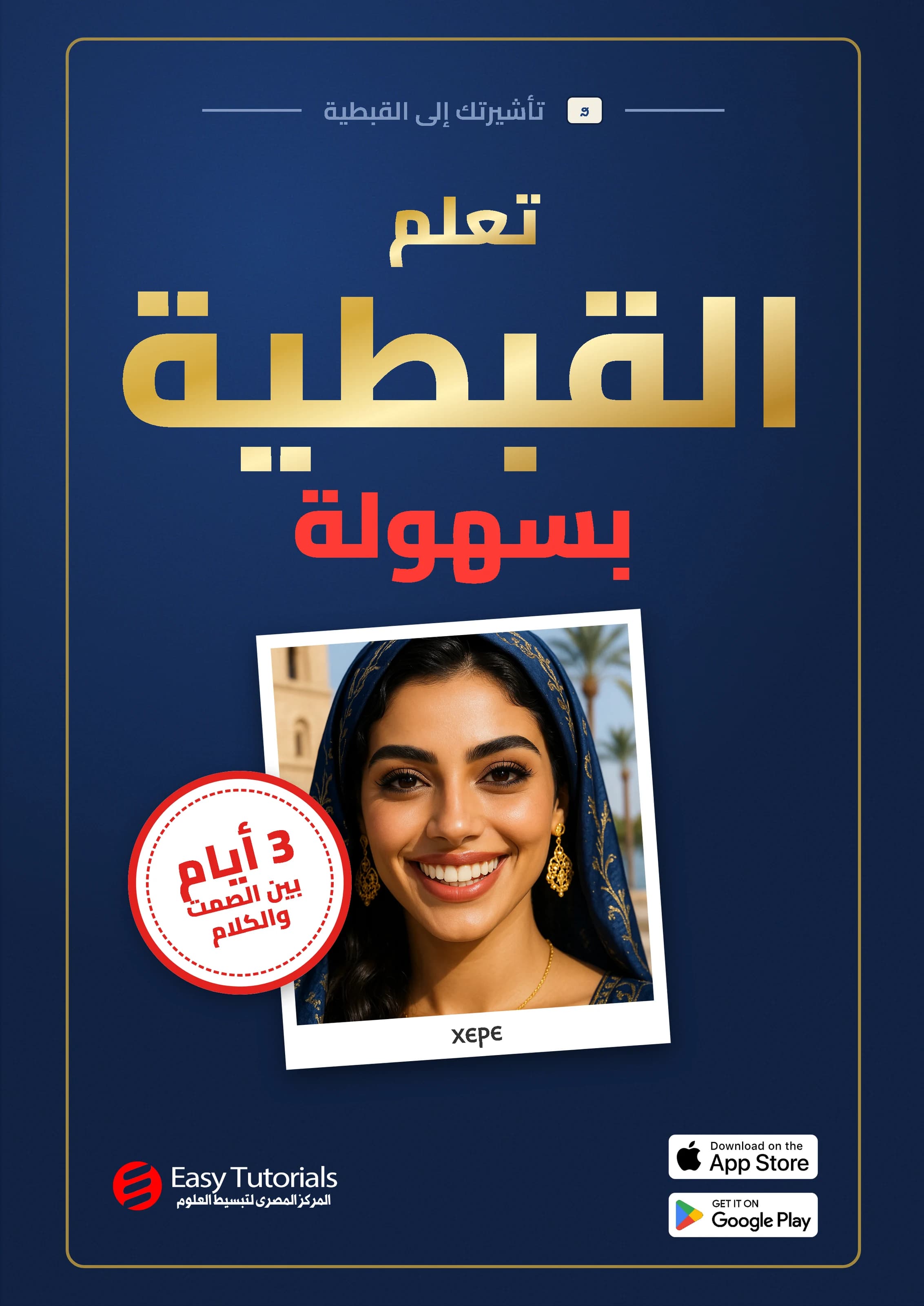
Learn Coptic Easily
A straightforward guide to mastering the Coptic language
Unlock the beauty of the Coptic language with ease.
What you'll learn
- Fundamental Coptic vocabulary
- Basic grammar rules
- Pronunciation techniques
- Reading comprehension skills
- Writing in Coptic
- Cultural context of the language
About this book
Learn Coptic Easily is designed for anyone interested in exploring the rich heritage and linguistic structure of the Coptic language. This book simplifies the learning process, making it accessible for beginners and those looking to deepen their understanding of this ancient language.
Through clear explanations and practical exercises, readers will gain confidence in their language skills. Whether for academic pursuits, personal interest, or cultural enrichment, this book serves as an essential resource for anyone eager to connect with Coptic history and literature.
Who this book is for
- Language enthusiasts
- Students of Coptic studies
- Cultural historians
- Travelers to Egypt
- Religious scholars
Why read this book
- User-friendly approach for beginners
- Engaging exercises to reinforce learning
- Rich cultural insights throughout the text
- Comprehensive coverage of essential topics
About the language
Coptic is the last stage of the ancient Egyptian language and belongs to the Afroasiatic family, like Arabic. It was spoken in Egypt for centuries until Arabic gradually replaced it. No one speaks it today as a mother tongue, but it is still the liturgical language of the Coptic Church.
Where it is spoken

Egypt
Writing system
Written in Greek letters plus a few extra letters taken from Egyptian Demotic script, from left to right.
Quick facts
- Bohairic is the dialect used in Coptic Church services today; Sahidic was the main literary dialect in earlier times.
- Champollion's knowledge of Coptic helped him decipher hieroglyphs.
- Egyptian farmers still use Coptic month names such as Tut, Tuba and Amshir.
- The Nag Hammadi library, discovered in 1945, is written in Coptic.
Why learn it
- Understand the prayers and ancient texts of the Coptic Church.
- Study Egyptology, since Coptic is a key to how ancient Egyptian was pronounced.
- Learn the origins of many words and place names in Egypt.
Words shared with Arabic
- طوبة (tuba) — Arabic for brick, from Coptic; also the name of a Coptic month.
- تمساح (timsah) — Arabic for crocodile, from Coptic msah, of ancient Egyptian origin.
- أمشير (Amshir) — A Coptic month name still used in Egypt's farming calendar.
Comes with the book: the «Learn and Speak Easily» app
The book teaches you the word; the app trains you to say it. Open the app with your easyT account and practise every word and phrase in the book out loud.
1,639 words and phrases to practise in this book
Hear the right pronunciation
Every word and phrase in the book, spoken clearly, at normal speed or slowly.
Test yourself on every sign
The app shows a sign and asks for its meaning or its sound; pick the right answer out of 4.
The book's own chapters
Same chapters in the same order, with the word, its pronunciation in Arabic letters, its meaning and the book page.
A quiz after every chapter
Quick questions on what you learned; the app keeps your best score and your progress per chapter.
App details
- Free for everyone who bought the book, printed or digital
- Every language is open to Premium subscribers
- Sign in with your easyT account
- Works offline after a language is opened once
- Checking runs on your phone — your voice is never recorded or stored

 Coming soon to the store