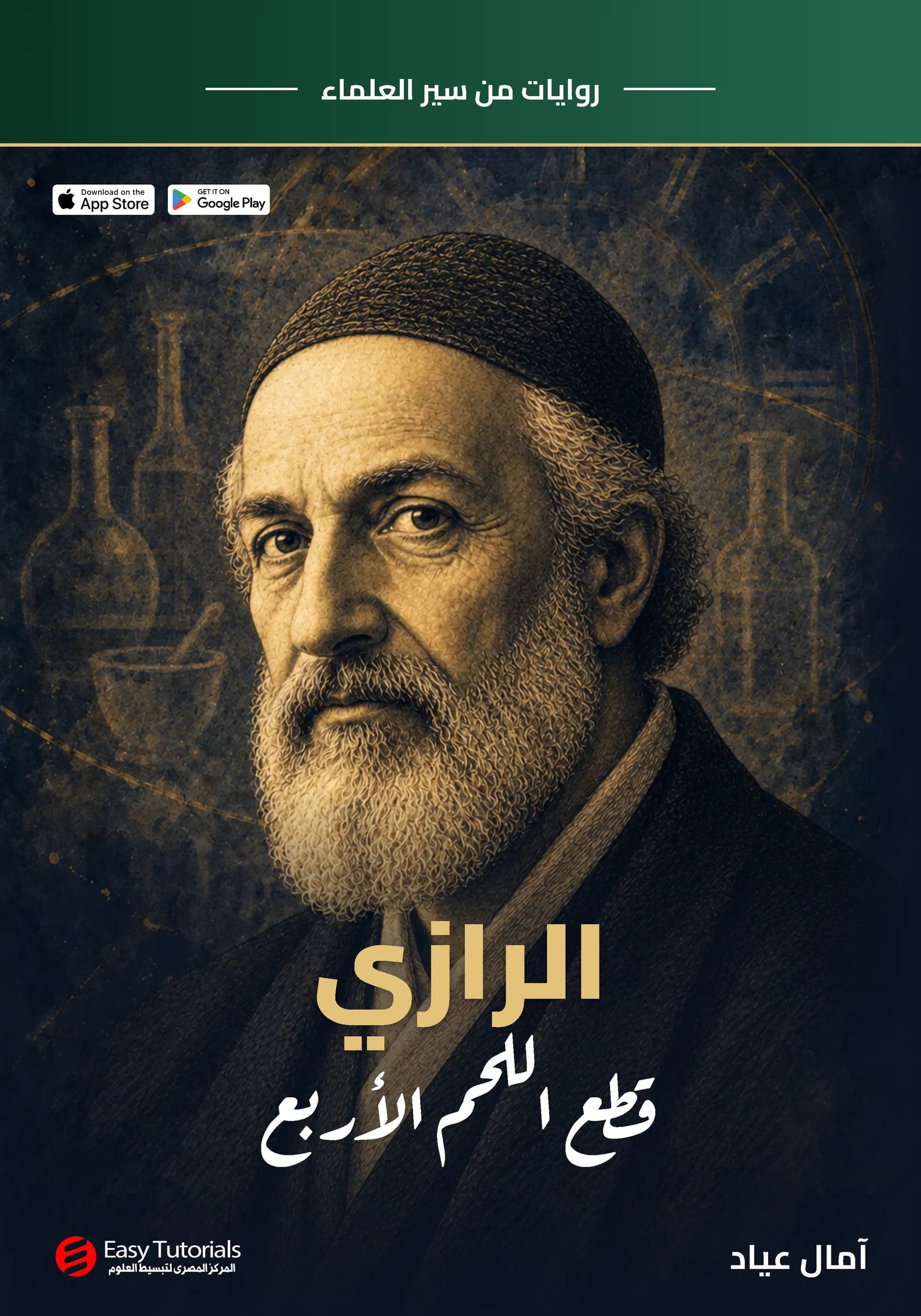
Al-Razi: The Four Pieces of Meat
A novel from the series "Novels from the Lives of Scientists"
Al-Razi's life as you have never read it: a true story told scene by scene.
What you'll learn
- Follow Al-Razi's life from his childhood in Rayy to his last days there as one connected story
- Understand how he chose a hospital site with pieces of meat hung in 4 places, and why he writes what he sees, not what he thinks
- See why he wrote a page for every patient, and how he compared patients who were treated with patients who were not
- Learn how he told smallpox from measles, and why some people sneeze at the smell of roses
- Meet the friends and pupils who live with him in the story
- Tell what really happened from what the author imagined in every chapter
About this book
Baghdad, around 902. A man of about 37 stands on the bank of the Tigris before sunrise and hangs a red piece of meat on a wooden pole. The workers laugh: they sent us a doctor, and we got a butcher! The builder wants a site for the new hospital today. Sahl, the most famous doctor in Baghdad, says the old books know the place, and the book is never wrong. The man answers in his quiet voice: the books do not know Baghdad, the meat does. Four pieces, in the market, a narrow lane, the orchards and by the river, and a folded paper in his sleeve where he writes every morning.
This is a novel, not a biography. It starts with a boy in Rayy, a city under a high mountain, asking Hassan the butcher why one piece of meat turns before another. It follows him as he distills rose water in a room on the roof until the fumes tire his eyes, then in Baghdad among the books of the ancient doctors, then in the hospital of Rayy where he writes a page for every patient with his pupil Yusuf, then in the hospital by the river, then with the children in the days of smallpox and measles, until his pupils gather his papers after his death into a great book called Al-Hawi. The main events, dates and names are real, and the story is told in scenes and dialogue as if you were watching it.
The science is explained with pictures from daily life: meat is like a wound, and where meat spoils fast, a wound spoils fast too; steam rises, cools and turns back into clear water, like dew on a window in the morning; memory makes a story prettier, but the page does not lie; twins share one face, yet you only see how differently they walk if you look for a long time; a nose that sneezes at roses is like the one door that bangs while the wind passes over all the doors. No equations and no difficult terms. A final section tells you clearly what is real and what is imagined in every chapter.
The book is written in Arabic.
Who this book is for
- Young readers aged 13 to 18
- Lovers of novels and life stories
- Parents looking for useful reading for their children
- Teachers
- Anyone who loves science but not equations
Why read this book
- 14 chapters in 240 pages
- Real events, dates and names
- Simple, gripping Arabic
- A line drawing at the start of every chapter