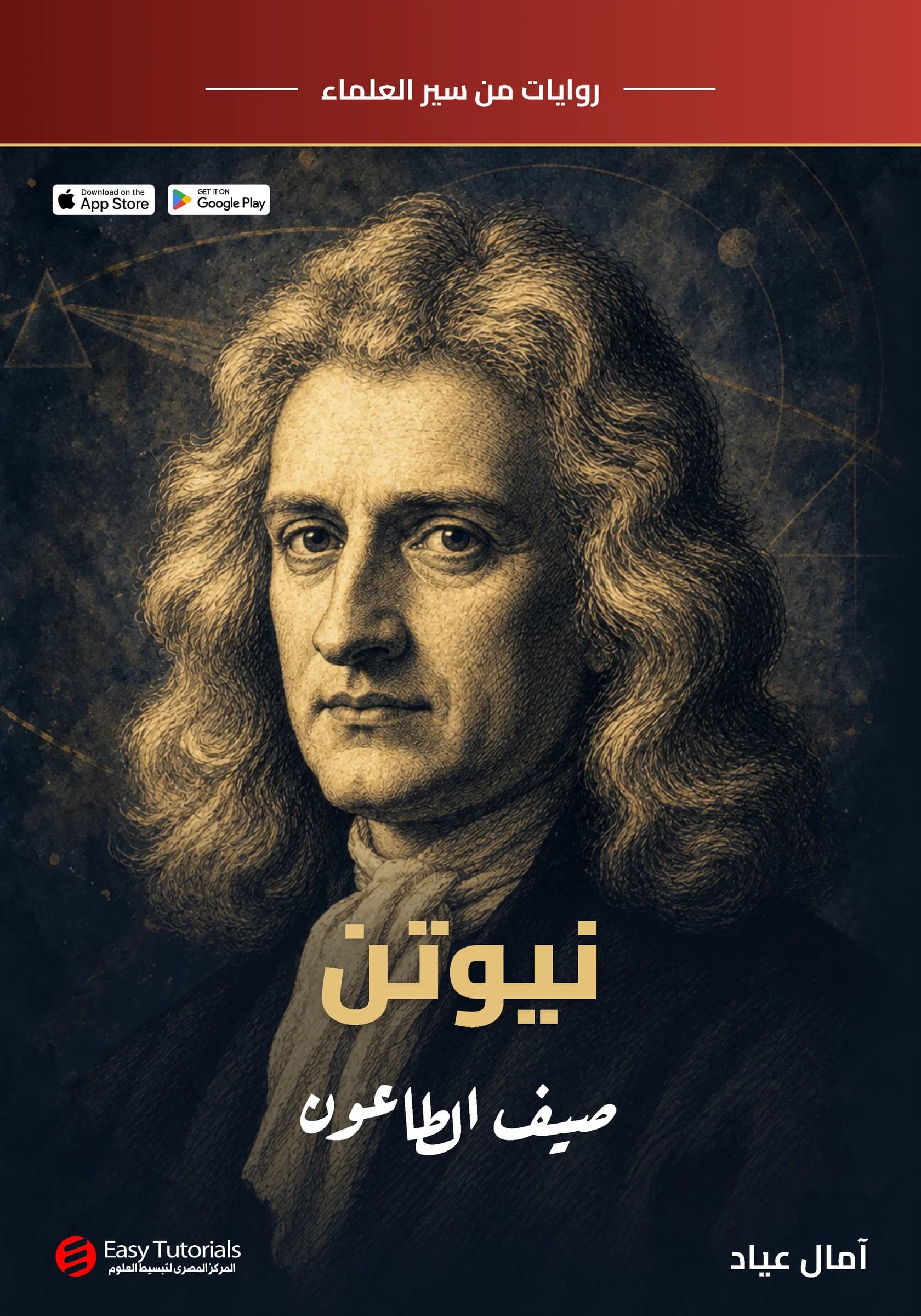
Newton: The Plague Summer
A novel from the series "Novels from the Lives of Scientists"
The story of the young man who asked about an apple and reached the Moon: a true story told scene by scene.
What you'll learn
- Follow Newton's life from his birth to his last days as one connected story
- Understand his idea of the pull that draws the apple and holds the Moon through everyday examples
- Learn how he discovered that white light is many colours mixed together
- See how a big question grows out of a small observation
- Meet the scientists who lived alongside him and shaped him, such as Halley and Hooke
- Tell what really happened from what the author imagined in every chapter
About this book
Summer 1666. The plague has closed the university, and a young man of 23 sits in the orchard of his mother's house in the countryside. An apple falls, and he looks up at the Moon and asks: does the pull that draws the apple to the ground reach all the way up there?
This is a novel, not a biography. It starts with a lonely child who tells the time from the Sun's shadow on the wall, follows him as a poor student who serves his classmates to pay his way, and then as the man who writes a book saying that everything in the world pulls on everything else. The events, dates and names are real, and the story is told in scenes and dialogue as if you were watching it.
The science is explained with pictures from daily life: a falling apple, a stone whirling in a sling, a rainbow on the wall of a darkened room. No equations and no difficult terms. A final section tells you clearly what is real and what is imagined in every chapter.
The book is written in Arabic.
Who this book is for
- Young readers aged 13 to 18
- Lovers of novels and life stories
- Parents looking for useful reading for their children
- Teachers
- Anyone who loves science but not equations
Why read this book
- 14 chapters in 240 pages
- Real events, dates and names
- Simple, gripping Arabic
- A line drawing at the start of every chapter