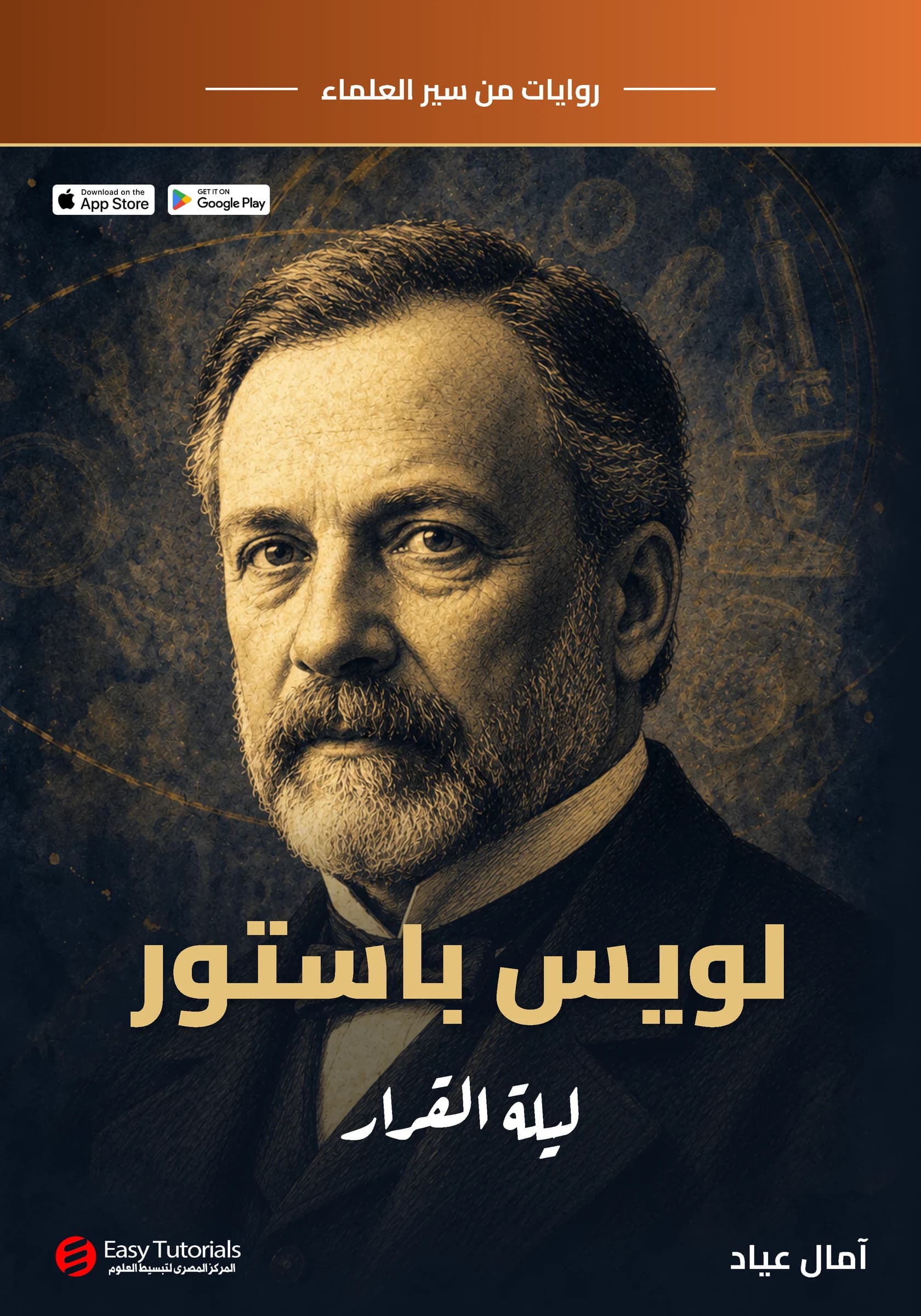
Louis Pasteur: The Night of the Decision
A novel from the series "Novels from the Lives of Scientists"
Pasteur's life as you have never read it: the true story of a boy at the door and a scientist who must decide before nightfall.
What you'll learn
- Follow Pasteur's life from his childhood in Arbois to his last days as one connected story
- Understand how the body learns to protect itself from disease through everyday examples
- Learn why milk and juice go bad, and how gentle heating keeps them safe
- See how a long look at a small thing leads to a great discovery
- Learn how he kept working after his left side went still and he walked with a stick
- Tell what really happened from what the author imagined in every chapter
About this book
On the morning of 6 July 1885 in Paris, a mother knocks at the door of a laboratory with her son Joseph, aged 9. A sick dog has bitten him 14 times. The scientist who opens the door has a method he has tested for years, but never on a human being. And he must decide before night comes.
This is a novel, not a biography. It starts with a boy in the town of Arbois who draws the faces of his family in coloured chalk, follows him as a young man who came back from Paris because he could not bear to be far from home, and then as the man who sees under the lens living things smaller than dust and learns how to protect people from them. The events, dates and names are real, and the story is told in scenes and dialogue as if you were watching it.
The science is explained with pictures from daily life: a house guard who remembers the face of a weak thief, a flask with a neck like a goose's neck, a right glove and a left glove, warm bath water. No equations and no difficult terms. A final section tells you clearly what is real and what is imagined in every chapter.
The book is written in Arabic.
Who this book is for
- Young readers aged 13 to 18
- Lovers of novels and life stories
- Parents looking for useful reading for their children
- Teachers
- Anyone who loves science but not equations
Why read this book
- 14 chapters in 240 pages
- Real events, dates and names
- Simple, gripping Arabic
- A line drawing at the start of every chapter