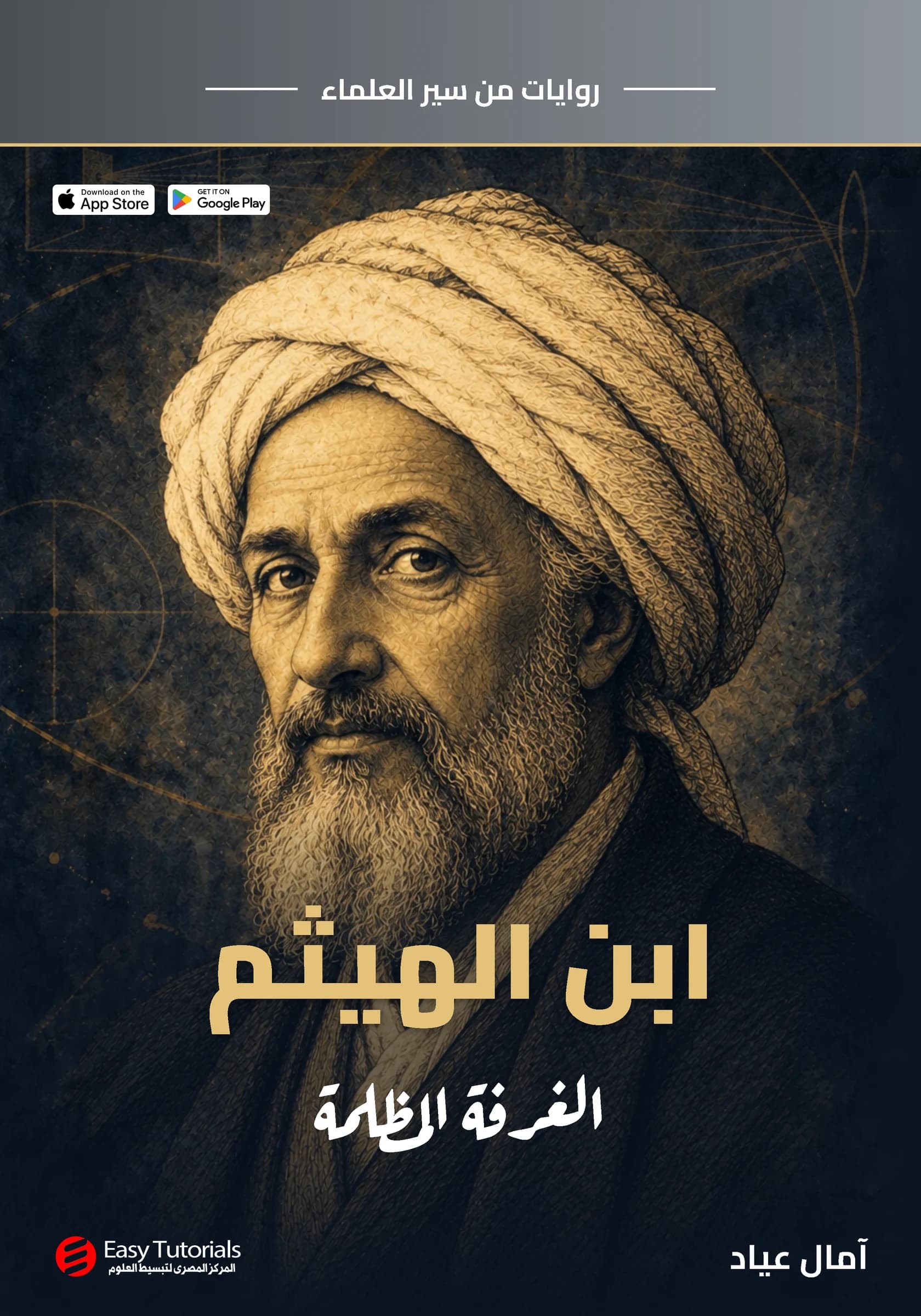
Ibn al-Haytham: The Dark Room
A novel from the series "Novels from the Lives of Scientists"
Ibn al-Haytham's life as you have never read it: a true story told scene by scene.
What you'll learn
- Follow Ibn al-Haytham's life from childhood to his last days as one connected story
- Understand his idea about light and sight through everyday examples
- See how a big question grows out of a small observation
- Learn how he kept going after he could not do what he had promised on the Nile and shut his door for years
- Learn his method: accept nothing until you have tested it and repeated it, and doubt even the books of the ancients
- Tell what really happened from what the author imagined in every chapter
About this book
A man in Cairo has boarded up the windows of his house, and the people of his alley say he has lost his mind. One day in the summer of 1012, light comes in through a small hole and the whole street appears upside down on the wall of his room. From that wall his question begins: how do we see?
This is a novel, not a biography. It starts with a boy in Basra amazed by an oar that looks broken in the water, follows him as he travels to Cairo at about 45, then up the Nile to Aswan and back in shame, and then through the years he spends testing light in his closed house until he writes his book in 7 parts. The events, dates and names are real, and the story is told in scenes and dialogue as if you were watching it.
The science is explained with pictures from daily life: an oar in the water, a ball thrown at a wall, lamps in front of a hole, a moon that looks big at the horizon. No equations and no difficult terms. A final section tells you clearly what is real and what is imagined in every chapter.
The book is written in Arabic.
Who this book is for
- Young readers aged 13 to 18
- Lovers of novels and life stories
- Parents looking for useful reading for their children
- Teachers
- Anyone who loves science but not equations
Why read this book
- 14 chapters in 240 pages
- Real events, dates and names
- Simple, gripping Arabic
- A line drawing at the start of every chapter