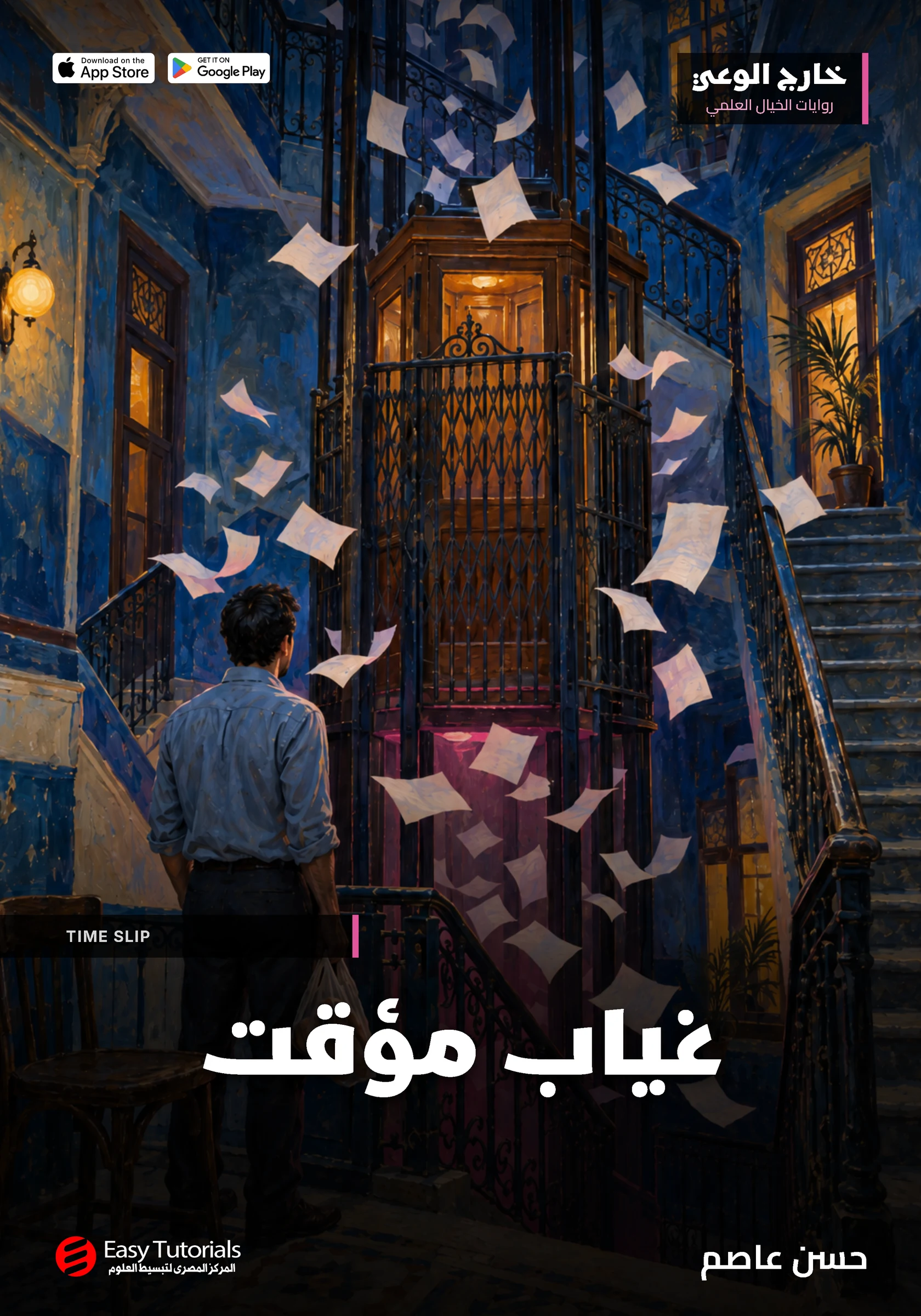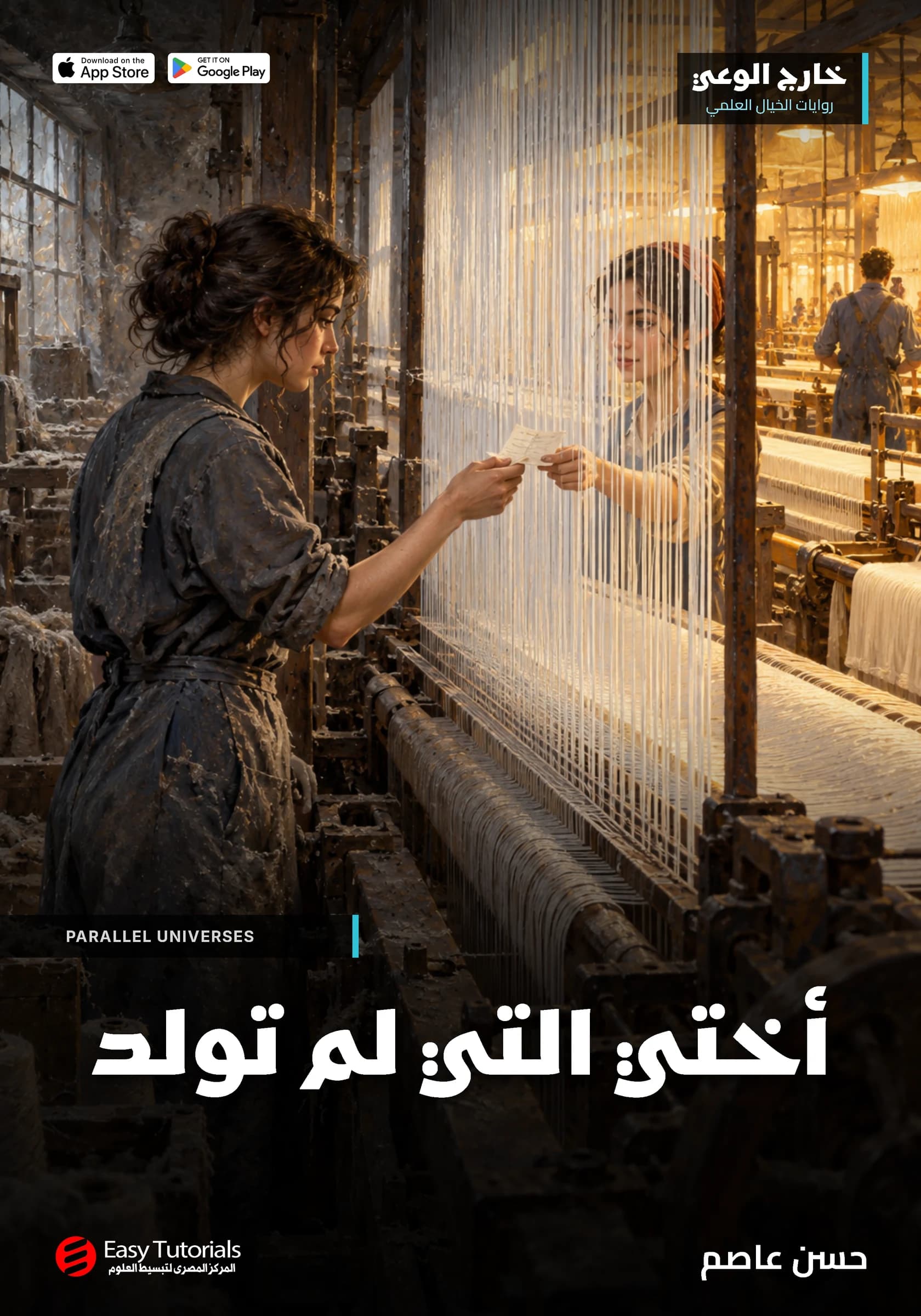
The Sister Who Was Never Born
A novel from the series "Beyond Awareness"
A note in the hand of a sister who was never born, arriving with the factory whistle from a world where her father is still alive.
What you'll learn
- Understand Hugh Everett's many-worlds idea through a simple picture: one thread from a spool that splits into two
- Discover Edward Lorenz's butterfly idea, and how a tiny difference can grow until it changes a whole life
- Learn what the liver virus is, why it is called the silent disease, and why its medicine must not be stopped for a single day
- See how a new medicine in tablet form changed the lives of millions of patients in Egypt
- Live a race against time and the scale with Rana, and ask with her: what if my father had chosen another road?
- Tell the real science from the imagined in every idea of the novel
About this book
El Mahalla El Kubra, the night of 17 February 2025. Rana Mostafa Qandil is a 24-year-old weaver. For three nights she has been helping the engineer Wael El Mahallawy count the looms of an old weaving hall before it is torn down. The hall is dark, the power is cut, and every loom is covered in a grey layer of cotton fluff. When Wael steps out to refill his tea flask, Rana finds her feet walking back on their own to loom 17, her father's loom, which nobody has fixed since he died. The shuttle box is empty; she saw its bottom with her own eyes. Then the eleven o'clock whistle sounds. Now there is a note in the box, written in green ink, with a smiling face and a signature: Shahd Mostafa Qandil.
Rana writes and Shahd answers, note for note, with every shift whistle. Rana learns that on the morning of 11 March 2008 the world stood between two roads: her father could travel to Cairo for a new job, or stay to fix the loom. Here he left and died in a crash on the Tanta road. There he stayed, lived, and had a second daughter, Shahd. But the father over there is sick with a liver virus, his doctors only know the old injections, and the medicine that can cure him is sold here, in the pharmacy of Rana's friend Nehal. The box has a strict rule: nothing passes unless something of the same weight comes back, and the allowed difference grows smaller each time. Beside her are Wael and his tea flask, the old master Bassiouny who knows more about the loom than he says, and a mother who has been silent for 17 years. And the hall will be demolished in a few weeks.
Behind the story is a real idea. In 1957 the American physicist Hugh Everett suggested that the smallest things may not choose one result: all results happen, each in its own branch of the world, like a road that splits in two, and no branch knows about the other. Scientists still discuss it seriously; no one has proved it or ruled it out. Next to it is Edward Lorenz's butterfly idea: a very small difference at the start can grow until it changes everything, just as one broken thread at the start of a cloth shows its flaw along the whole fabric. The novel explains this with images from weaving and daily life, with no equations. It also tells a real story: the liver virus that was in so many Egyptian homes, and the new medicine that cured millions. At the end of the novel, a section called "What is real and what is imagined" separates the real science from the fiction.
The book is written in Arabic.
Who this book is for
- Fans of science fiction
- Fans of suspense and mystery novels
- Those who like to understand science without equations
- Readers curious about the universe and the idea of parallel worlds
- Anyone looking for a gripping Arabic novel they will not put down
Why read this book
- 14 chapters in 240 pages
- A real scientific phenomenon at the heart of the story
- Simple, gripping Arabic
- Suspense to the last page